
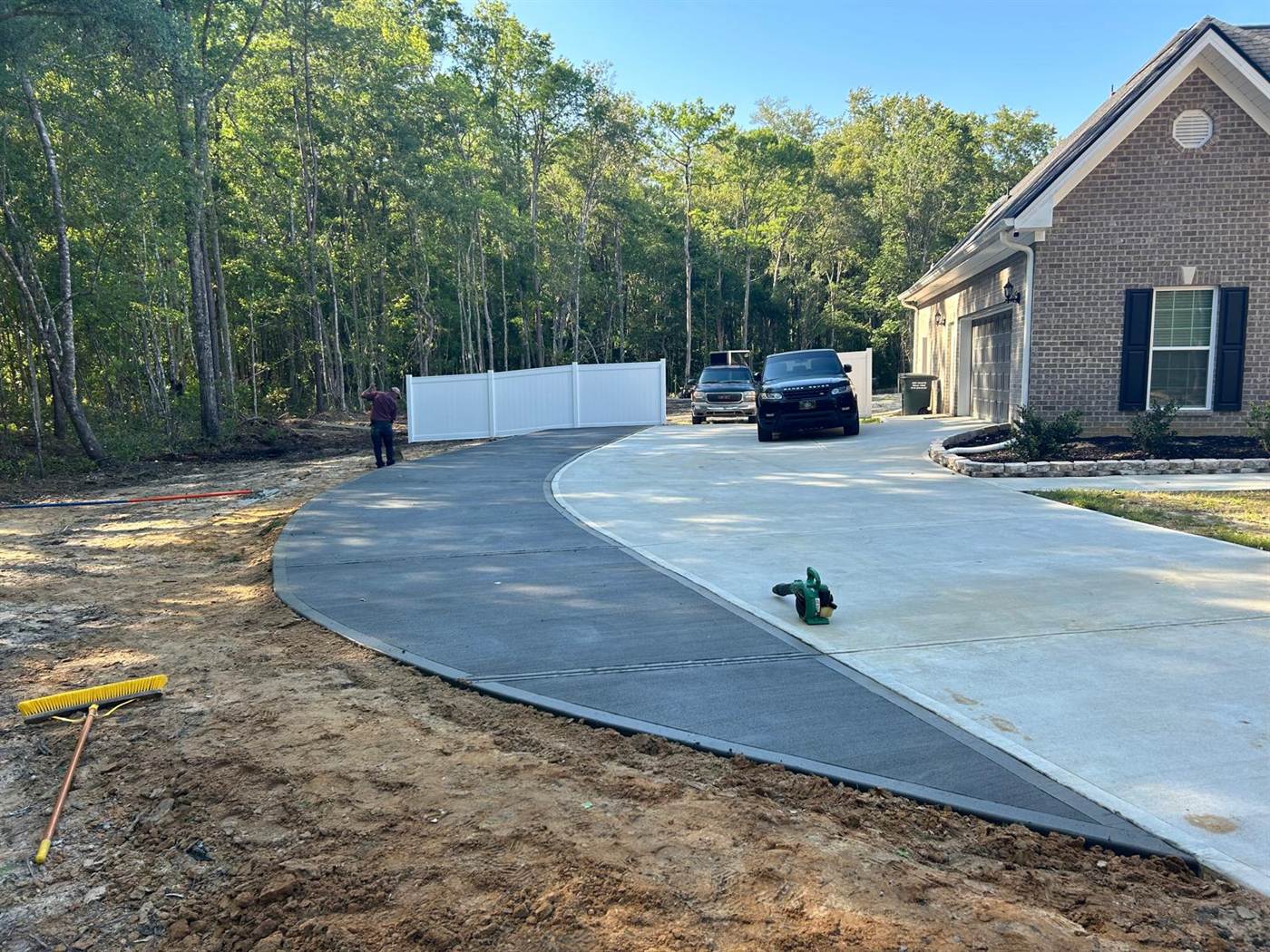
Concrete Driveway Replacement and New Driveways
Removal, base repair, reinforcement, jointing and finishing — done so the new driveway drains properly and cracks where it is meant to.
Driveways rarely fail because of the concrete
They fail because water got underneath, or the base was never compacted, or the slab was too thin for what parks on it, or nobody cut a joint so it cracked wherever it felt like. Replacing the surface without fixing that gets you the same driveway again in five years.
So the first visit is spent on the ground, not the finish: where the water goes, what the base is made of, how the truck gets in, and what has to come out first.
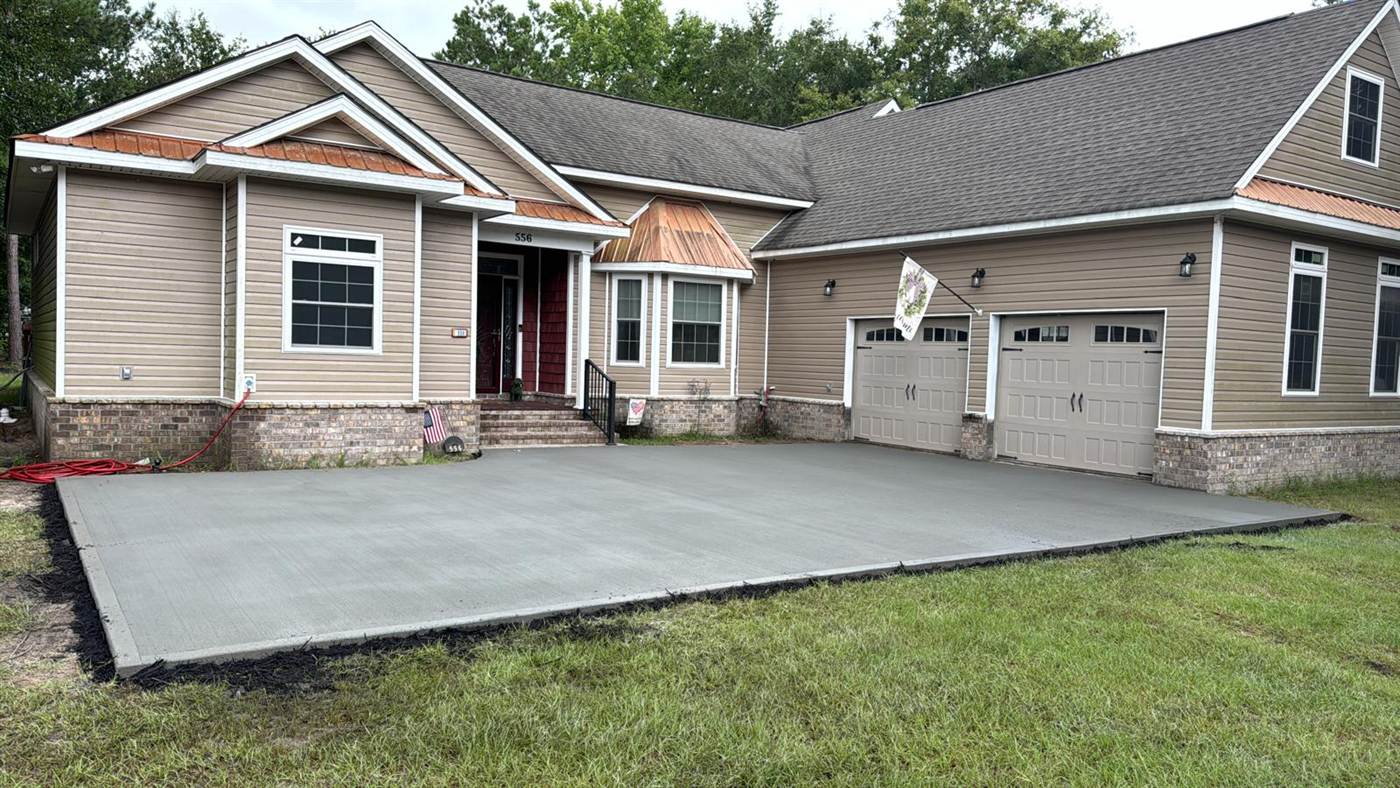
Removal and replacement, step by step
Every line below shows up on the estimate so you can see what you are paying for.
Break out and haul off
The existing slab is broken up and removed from site. No burying the old driveway under the new one.
Subgrade and drainage
Base graded, compacted and pitched so water runs away from the garage and the foundation.
Forms and reinforcement
Edges formed to the line you want, with mesh or rebar sized for the loads the driveway will carry.
Pour and finish
Placed, screeded and floated, then broom finished for grip or smooth-finished if you prefer.
Joints and edges
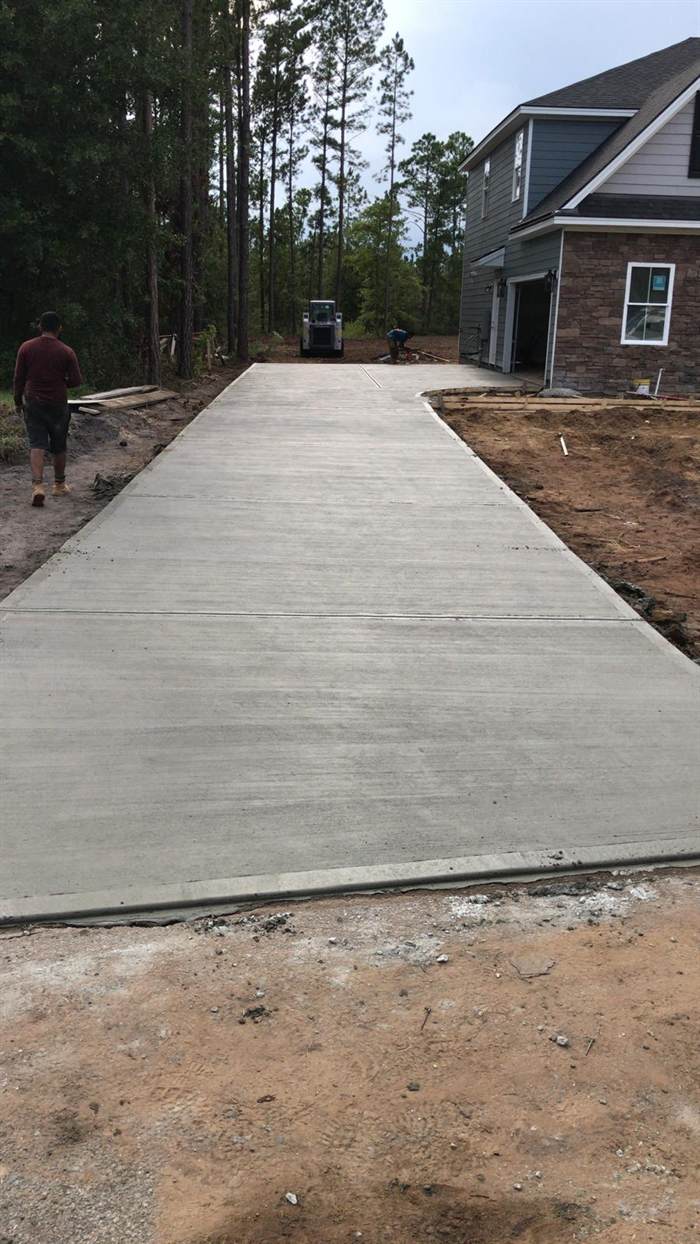
Control joints cut on a pattern, edges tooled, and the apron tied cleanly into the street or the existing curb.
Cleanup and cure
Site cleared, washout handled, and clear instructions on when you can walk on it and when you can drive on it.
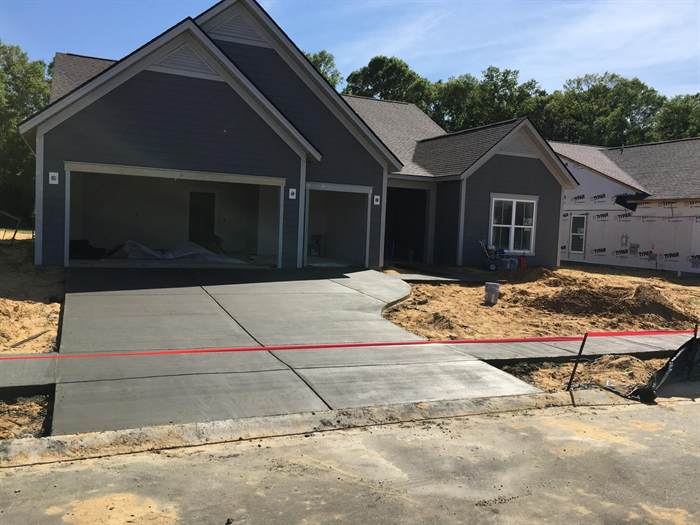
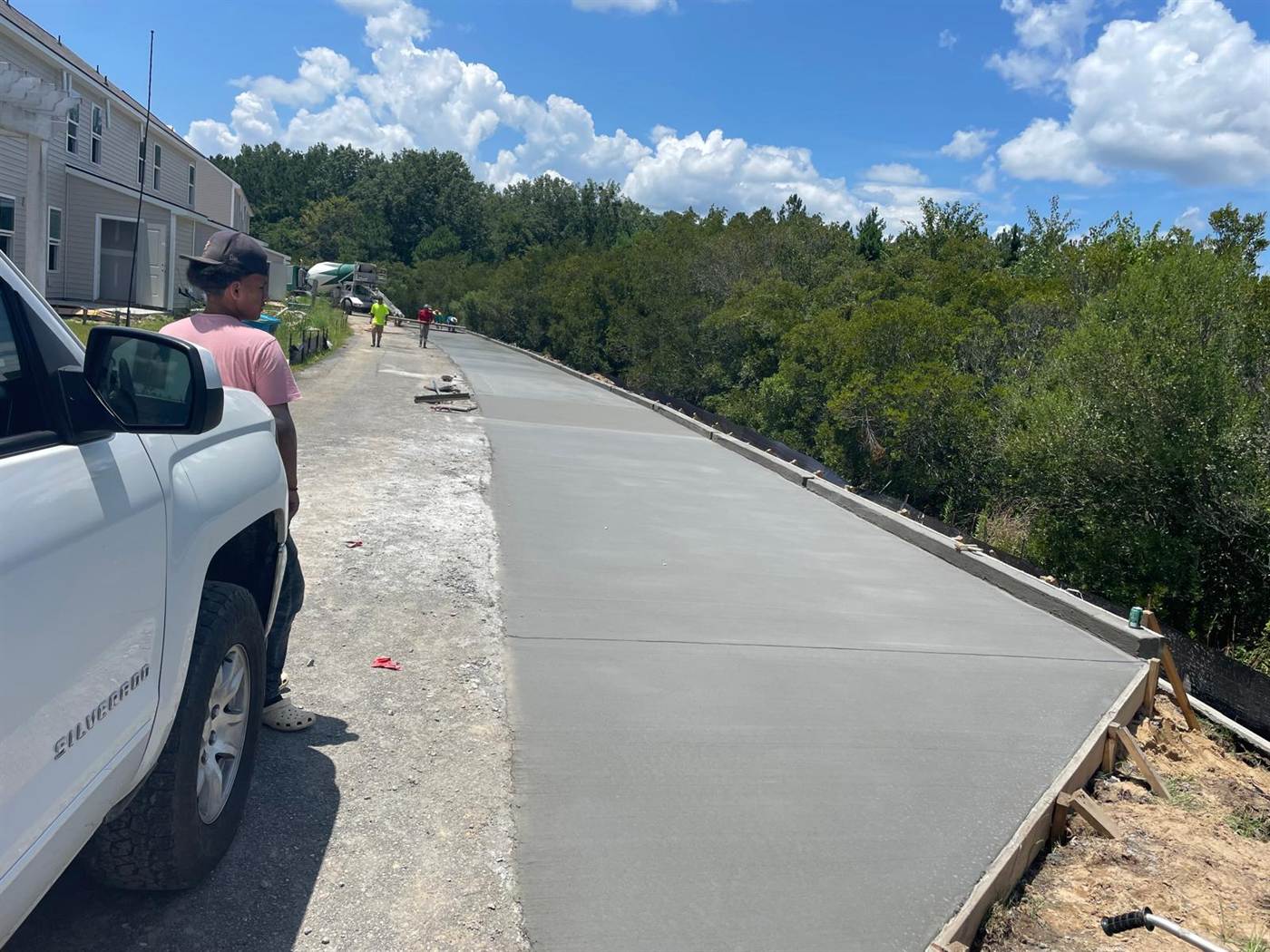
Recent driveways and aprons
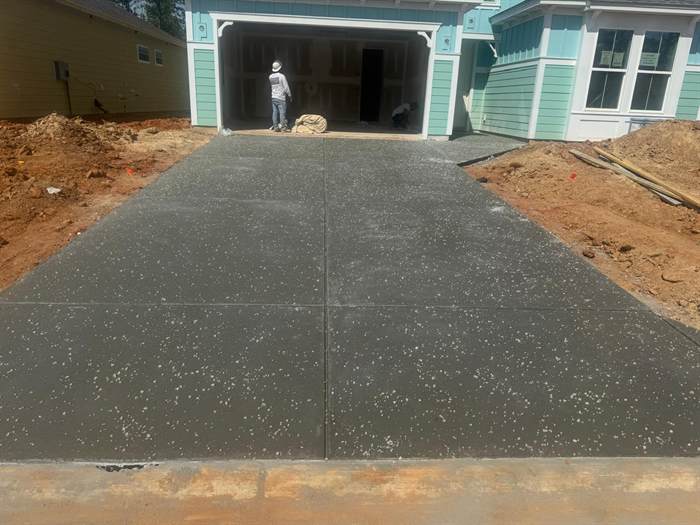
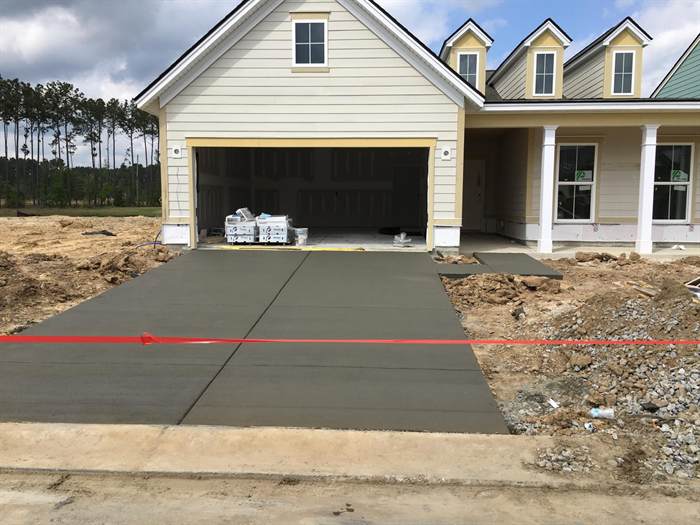
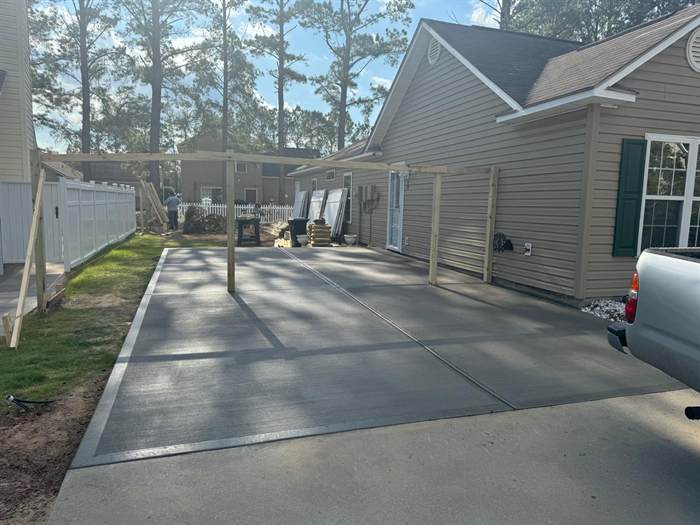
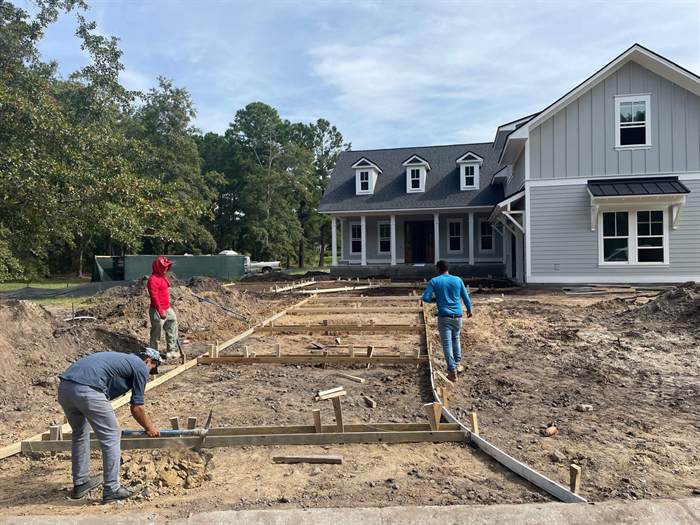
The rest of the flatwork
If the driveway is coming out anyway, the walkway, apron and patio are cheaper to do in the same mobilisation than to come back for.
- Walkways and front entries tied into the new driveway at the same elevation.
- Aprons and street tie-ins matched to the existing curb line.
- Parking pads and turnarounds sized for the vehicles that actually use them.
- Garage and carport slabs poured to the same thickness spec as the drive.
- Patios and pool surrounds — see flatwork and patios.
What people ask before replacing a driveway
Do you remove the old driveway?
Yes. Breaking out the existing slab and hauling it off site is part of a replacement scope and appears as its own line on the estimate. We do not pour over a failed slab.
How thick will the new driveway be?
Thickness and reinforcement are set by what will park on it and what the local code requires. A car-only residential drive and one that will carry a truck or an RV are not the same slab, and we will tell you which one you are buying.
How long before I can drive on it?
Verify before publishing — add the cure times you actually give customers for foot traffic and for vehicles, and note how weather changes them. Do not publish a number operations does not stand behind.
Will the new concrete match my existing concrete?
New concrete is lighter than weathered concrete and will stay noticeably different for months. It evens out as it ages, but if the appearance matters, replacing the adjoining sections at the same time is the only way to get a true match.
Can you work around trees, gates and tight access?
Usually. Access is one of the first things we check on the site visit, because it decides whether concrete arrives by truck chute, buggy or pump — and that affects the price. Tell us about gates, overhead wires and root systems before we come out.
Ready to price your driveway?
Send a few photos and the address, and we will arrange a site visit.